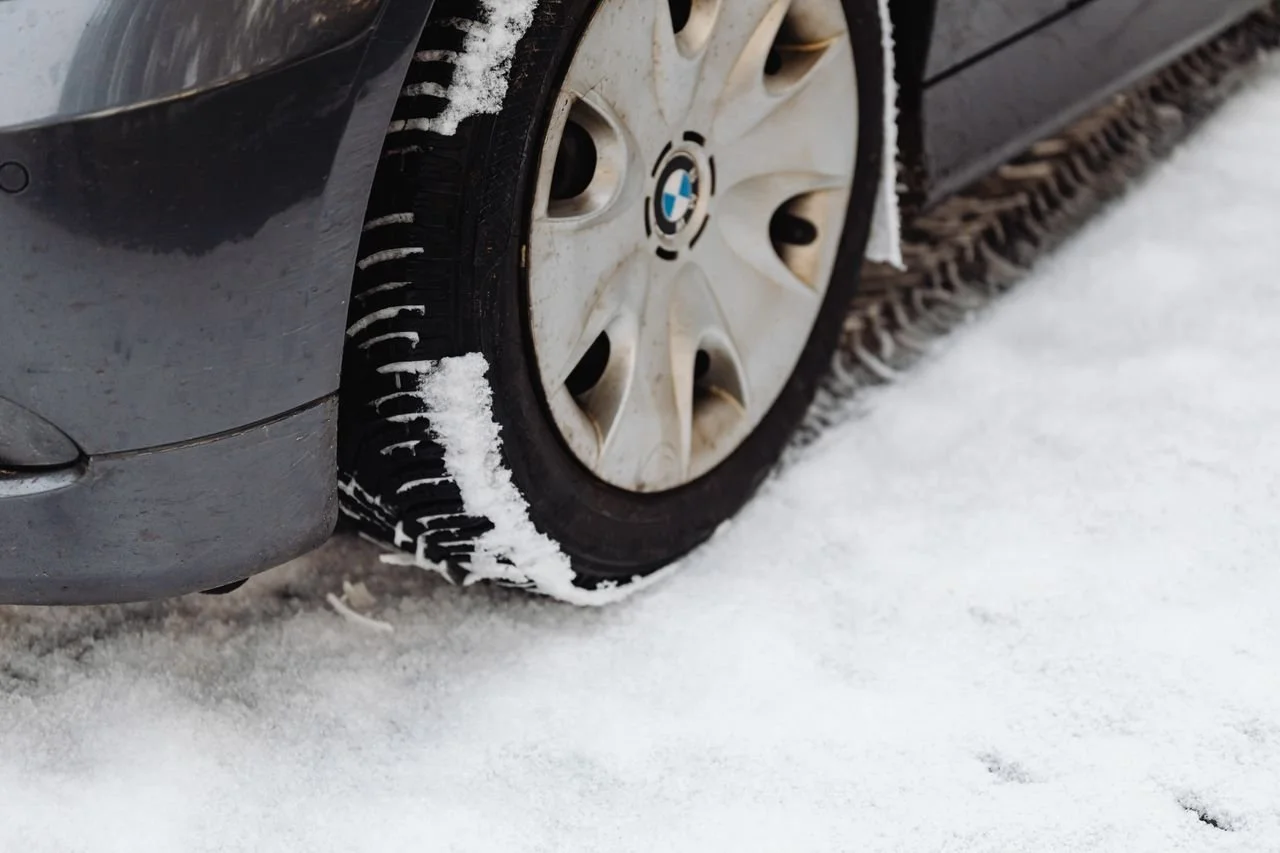
The three-peak mountain snowflake symbol on the sidewall is the marking to look for when you shop for winter tires Calgary drivers can count on. It shows the tire passed a snow traction test. The M+S marking, short for mud and snow, only describes the tread pattern and does not require that test, and the same goes for an all-season label. Our team at Bowest Motors has helped Bowness drivers get ready for Calgary winters since 1958, so get in touch with our team to book your tire service appointment before the cold sets in.
What the Three-Peak Mountain Snowflake Symbol Actually Guarantees
The symbol is a mountain outline with a snowflake inside it, and it means the tire met a minimum snow traction standard in standardized testing. The tire's snow grip is measured against a reference tire, so the symbol is earned through performance rather than claimed through tread design. It does not promise ice grip, and it says nothing about how the tire will hold up as the tread wears. It does tell you the rubber and tread were built to bite into snow, which makes it the best single marker when you compare options.
Why the M+S Marking Is Not the Same Promise
M+S is a tread description, not a performance rating. It refers to features such as open grooves, and manufacturers can apply it without a snow traction test behind it. Many all-season tires carry the marking, but their rubber still stiffens as temperatures fall. A tire with only M+S on the sidewall may be a fine choice for spring and fall, yet it has not shown it can match a winter-rated tire on snow. If the three-peak mountain snowflake is missing, treat M+S as a tread description and not a winter guarantee.
How Winter, All-Weather, and All-Season Tires Handle Ice, Slush, and Dry Cold
Dedicated winter tires use a softer compound that stays flexible well below 7°C, along with deep treads and small slits called sipes that grip ice and clear slush. They give the shortest stopping distances on cold, icy pavement, and Calgary's freeze-thaw cycles produce plenty of that. All-weather tires carry the three-peak mountain snowflake symbol and use a compound that works across a wider temperature range. They handle snow well, but they give up some grip on ice and in deep cold. All-season tires are tuned for mild conditions. Around 7°C the rubber starts to harden, and grip on ice, slush, and even cold dry pavement falls off.
Whether In-City Commuters Can Get By on All-Weather Tires
Many in-city commuters can, as long as the tires carry the three-peak mountain snowflake symbol. Calgary's main roads are plowed and sanded quickly, trips are short, and speeds stay lower, so the compromise in ice grip matters less. All-weather tires also remove the twice-a-year swap, since they stay on all year. The trade-off is faster wear in summer heat and less grip on side streets and hills when a cold snap follows a chinook. If your commute includes steep driveways or unplowed residential streets, a dedicated winter set still gives you more margin.
When Highway Runs to Banff Change the Answer
Regular highway trips to Banff tilt the answer toward dedicated winter tires. Higher speeds, long grades, sudden snow squalls, and shaded patches of ice near the mountains all put more demand on traction and stopping distance. Temperatures in the foothills and mountains also run colder than in the city, which is where a winter compound has its biggest edge. If you only head west a few times a season and can choose your travel days, all-weather tires with the symbol can still work. If the trip is weekly, or the drive continues into British Columbia where many highways have winter tire rules, winter tires are the safer choice.
How to Read Tire Age and Tread Depth Before You Buy
Start with the DOT code on the sidewall. The last four digits give the week and year of manufacture, so 2425 means the 24th week of 2025. Rubber ages even on the shelf, and many manufacturers recommend replacing tires six to ten years after the build date, so skip any set that has sat for years. Next, check tread depth. New winter tires usually start at 10/32 of an inch or more, and the legal minimum is 1.6 millimetres, or 2/32 of an inch. Most drivers replace winter tires near 4/32, or about 3 millimetres, since snow and slush performance drops well before the tread reaches the legal limit.
What to Confirm With Your Insurance Provider Before You Decide
Call your insurance provider before you buy. Ask whether your policy offers a discount for winter tires, and whether it asks for proof such as an invoice or a photo. Ask whether all-weather tires with the three-peak mountain snowflake symbol qualify for the same treatment as a dedicated winter set, since policies differ. A short call now avoids surprises later, and the answer may tip the decision between all-weather and winter.
Frequently Asked Questions
When Should I Put Winter Tires On in Calgary?
Switch once daily temperatures settle at or below 7°C, which often happens in October. Waiting for the first snowfall can leave you on the wrong tires during a cold, slick morning. Most drivers keep them on until temperatures stay above 7°C in spring.
Can I Mix Winter Tires and All-Season Tires on the Same Vehicle?
No, you should fit four matching tires. Mixing types gives the front and rear different levels of grip, which can make the vehicle harder to control when braking or turning. Four winter tires keep handling predictable.
Do Winter Tires Calgary Drivers Buy Last More Than One Season?
Yes, a good set typically lasts several winters, depending on how far you drive and how the tires are stored. Keep them in a cool, dry place away from direct sunlight in the off-season, and have the age and tread checked each fall before they go back on.
Whether you land on winter or all-weather tires, the team at Bowest Motors is happy to help you choose, check your tread, and mount them. Reach out to us anytime.